New Congregation Profile: Planting with Intention - Purpose Church

By Faith and Field Staff • August 24, 2026

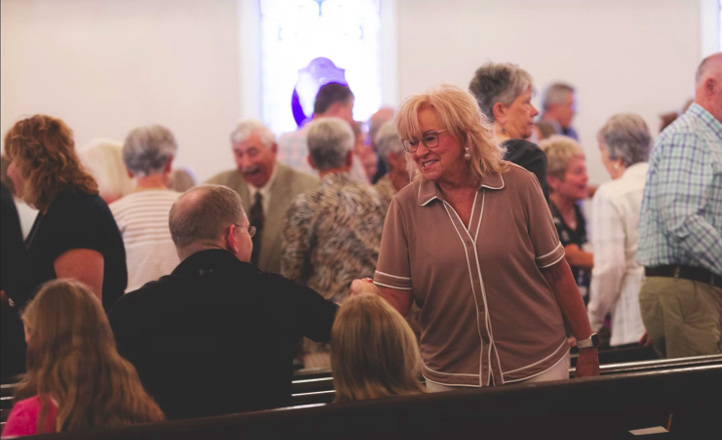
Purpose Church is a young and growing congregation taking root in Magnolia, Delaware, just south of Dover. Planted by Pastor William A. Guy and his wife, Tramaine.  Purpose Church was launched with a clear conviction: that every person has a God-given purpose waiting to be discovered and lived out in everyday life. 


The church’s early growth reflects that clarity. What began as a small gathering in a local fire hall soon outgrew its space, leading the congregation to relocate to Robinson Elementary School. That move signaled not only numerical growth, but a widening sense of engagement within the surrounding community. Purpose Church has quickly become a place marked by warmth, accessibility, and cultural diversity - intentional qualities in a region shaped by both longstanding roots and steady change. 


Pastor Guy’s own journey informs the church’s posture. He came to faith while attending Delaware State University, where he was active in campus ministry and athletics. Over more than two decades of ministry, he has served in a variety of leadership roles, including as an Air Force chaplain and a board-certified life coach. Those experiences shape a pastoral approach that attends to spiritual formation while also addressing emotional and relational wholeness. 


At its core, Purpose Church seeks to be practical and invitational. Worship gatherings emphasize clear teaching, meaningful relationships, and a sense of belonging for people from a wide range of backgrounds. “We want to help people uncover their purpose,” Guy explains, “and live it out in their families, workplaces, and communities.” 


As an Ascent–affiliated congregation, Purpose Church is part of a broader effort to plant churches that are both locally rooted and thoughtfully supported. That connection provides space for collaboration, shared wisdom, and long-term sustainability as the church matures. 


Still early in its journey, Purpose Church is focused on building a healthy foundation—one shaped by clarity of mission, strong relationships, and a steady commitment to helping people live into the purpose God has placed within them.


Learn more about Ascent’s Genesis Church Planters Cohort here.

By J.R. Briggs • October 8, 2026
If you have any involvement with the Christian faith, you’ve probably at least heard of Advent , the season leading up the celebration of the arrival of Christ’s birth. Before the celebration of the Christmas season, the Church Universal enters a season of intentional waiting, purposeful watching, and reflective remembering. We slow down long enough to rehearse the ancient story of Israel that longed for the coming of the Messiah long ago. We remember generations of people who waited in hope for God to act. Each year Advent reminds us of this reality. And we need this annual reminder because as humans we are so prone to forget what is true – really true. And as we know in our culture, it seems these weeks leading up to the arrival of Christ are the busiest, most intense, more packed our schedules are all year long. Advent invites us to practice attentiveness. It is the time where Christians stand on our tiptoes in a posture of attentiveness and anticipation in order to notice the quiet ways God moves in ordinary moments. Which is why Advent is so necessary . It is like training wheels placed on our lives to help guide us through the cultural busyness, to help us slow down so we don’t fall off the bike. Whether you have engaged meaningfully in the season of Advent for years or you have a cursory understanding of it, I want to invite you to join me on a daily journey through Advent. I want to personally invite you to subscribe to a free daily devotional that will land in your inbox each morning. It won’t be long, but it will be intentional and meaningful, a way to focus on a passage, a thought, and a few questions for reflection. My hope is not that you just read words on a page; it’s that you will take a few moments to slow down enough to notice the ways God is already drawing near in your life. Each week of Advent carries a theme that shapes our waiting for Christ’s arrival: Week 1 is about Hope, which reminds us that darkness does not get the final word. Week 2 focuses on Love, which reminds us that God moves toward us before we ever move toward Him. Week 3 centers on Joy, which reminds us that the nearness of God changes everything. Week 4 brings our attention to Peace, which reminds us that Christ is restoring what is broken in our world. These four themes are clear and hope-filled signs of God’s kingdom breaking into the world through Jesus. Wherever you find yourself this Advent—whether in a season of clarity or confusion, joy or weariness—remember that God is already moving toward you. That is the heart of the Advent story: God coming near. And because God has come near in Jesus, the distance we often feel between heaven and earth has been bridged. The God who created the universe is not far away. He is present. He is attentive. Right here. Now. With us. Our hope is that this devotional will help you to be more attentive, and to notice that nearness of God in your life and in the world. I hope you’ll join us. Simply click HERE to subscribe.
By Bob Hyatt • October 5, 2026
“When God works in us, nothing is useless, and nothing is spared.” - Jeannine Brown, Carla Dahl, and Wendy Corbin Reuschling, Becoming Whole and Holy “There is no circumstance, no trouble, no testing, that can ever touch me until, first of all, it has gone past God and past Christ, right through to me. If it has come that far, it has come with great purpose, which I may not understand at the moment.” - Alan Redpath Here's something I've noticed about people as they get older: they tend to go one of two ways. They either get sweeter with age or they get crankier. They grow wiser and more like Jesus, or they grow bitter and more like the worst version of themselves. That's because life is formation. Everything we do and everything we go through shapes us one way or the other, mostly depending on how we respond to what happens to us, whether it's extraordinary or completely ordinary. Ministry works the same way. I've watched leaders come out of nearly identical trials in completely different shape. Some come out stronger. Others come out deeply wounded, discouraged, and ready to quit. The difference usually comes down to where they see God in the middle of the struggle, absent or present, and what questions they ask about it. Some ask, "God, why is this happening to me?" Others ask, "God, what could you want to form in me through this?" Both views of God will shape us, and so will both questions. They just shape us in very different directions. In my experience, the most common sin in church leadership is an obsession with numbers and results, paired with neglect of our own souls. On top of that, we rarely stop to notice how those numbers and results, and how ministry itself, are shaping us. So here's my suggestion: stop working so hard to develop your ministry and start noticing that your ministry is developing you. How you handle the realities of church leadership will determine not only what your church becomes but what you become. Leadership and ministry will form you. The only question is: into what? One tool God uses: the fishbowl Some people hesitate to become a pastor because it opens them up to scrutiny, and now and then to outright criticism. When I was a young leader, I hated the "fishbowl effect" of ministry. Everyone was watching me, and my mistakes seemed to count for a lot more than anyone else's. It felt deeply unfair that flaws that wouldn't even register at most people's jobs could cost me my job, my reputation, and my community. Never mind that maybe it bothered me so much because I had such a generous supply of those flaws. After years of living under the steady gaze of critics and cranks, I see the fishbowl differently. These days I actually welcome it. Richard Baxter, a Puritan pastor in the 1600s, put it this way: “While you are as lights set upon a hill, think not to lie hid... do your work as those that remember that the world looks on them... ready to make the worst of all... and to make faults where they cannot find them.”[1] Baxter understood that anyone who calls others to live like Jesus is going to get called out when they don't. His advice? Live like the world is watching, because it is. Some people in your life are ready to yell "Hypocrite!" at the first opportunity, to point out failings they share themselves, and, as Baxter says, even to invent faults when they can't find real ones. And Baxter's fishbowl had a few neighbors peering over the fence. Ours has a livestream, a comment section, and someone screenshotting the announcements. But Baxter goes further. He says we should be glad about it: “As you take yourselves for the lights of the churches, you may expect that men's eyes will be upon you. If other men may sin without observation, so cannot you. And you should thankfully consider how great a mercy this is, that you have so many eyes to watch over you, and so many ready to tell you of your faults; and thus have greater helps than others, at least for restraining you from sin. Though they may do it with a malicious mind, yet you have the advantage of it.” As a Pastor, you have more eyes on you and more people paying attention to how you live. That means you have more help than most in living well and avoiding sin. What some people mean for evil, God means for your good (Genesis 50:20). What looks like a downside of ministry turns out to be a path to maturity, to formation. In practical terms, living your life in front of others pushes you to do what you already know you should do. And it often keeps you out of things you might slide into if nobody were watching. One important caveat: embracing accountability isn't the same as tolerating abuse. Healthy scrutiny sharpens you. A congregant who attacks your spouse or treats your kids like church property is a different problem, and it calls for boundaries, not gratitude. Let's be clear, though: the fishbowl isn't enough on its own. What we're really after is internal: character, a changed heart. But knowing we're living out loud in front of a watching church and a watching world gives us structure, and that structure can help us build the habits and rhythms of holiness we want. As we try to let the heart and character of Christ take deeper root in us, we have the advantage of lots of eyes around us "encouraging" us to stay on the straight and narrow. My sense is that people who embrace this find that, over time, what starts on the outside moves more and more to the inside. Slowly, the choices we make because others are watching become, through habit, real character. Because I know people are watching, I think twice about what I say in public, what I scroll past on my phone, and how I talk to my kids at church or out on the sidewalk in front of the neighbors. More and more, those choices, first made because of an audience, become part of who I am. That's especially true when I treat those moments as kairos [2] moments: times when God breaks in and uses my awareness of a watching world to show me the character He wants to form in me and the choices He'd like me to make. But what if we don't embrace it? What about those who get shipwrecked by moral failure, character flaws, and private sins gone public? People who resent the fishbowl of ministry and the Christian life often end up living one way in public and another in private. It's as if their anger at being scrutinized pushes them into a divided life: they'll play by the rules in public but insist on their own rules in private. Frustrated with the audience around them, so eager to find fault, they forget the true Audience they live before. And as we've all seen from too many spectacular crash-and-burns, the fallout is often devastating. Families, churches, and the reputation of the whole Church take serious damage. Pastors, recognize that your formation is happening, one way or another… and make peace with the fishbowl. It's going to be there whether you like it or not. If you embrace it, you may find it spurring you on toward love and good deeds (Hebrews 10:24) and keeping you clear of the sins that have taken down so many in ministry before you. “You should thankfully consider how great a mercy this is, that you have so many eyes to watch over you.” Let the Holy Spirit use your public life, and every eye watching it, to shape and form you. The fishbowl and the formation of a life in ministry are coming either way. Let them help answer the question: into what? To further explore your own formation through ministry, join us at the Multiply Summit with special guest Rich Villodas this coming February in the Washington, D.C. area! Adapted from Eldership and the Mission of God by Bob Hyatt and J.R. Briggs. [1] Richard Baxter, The Reformed Pastor, London, 1657, p. 21. [2] Kairos is one of the Greek words for time, but it's different from chronos. Chronos is linear, calendar time. Kairos refers to significant moments full of possibility. Here, it means those times when God steps into chronos.

By Chris Backert • October 1, 2026
Timberlake Church in Lynchburg, VA is now an official partner of the Ascent Movement. Led by Pastor Brad McMullen , this multigenerational congregation is committed to helping people grow as disciples of Jesus and live out that faith in tangible ways. For many decades, Timberlake has been a faithful witness to the gospel in Lynchburg. However, over the past few years, after a season of denominational disruption, and with an increased focus on community impact, Timberlake has experienced significant growth as it has opened a new chapter. “Timberlake has experienced an impressive season of Spirit-led vitality and is now moving into a season of multiplication. It is an authentic witness to the disciple-making heritage of John Wesley, and is a great partner for the Ascent Movement and our vision. It joins many other former United Methodist Churches that have found a new home among the Ascent Community”, shared Chris Backert, Ascent’s Senior Director.
By Cedar Health Alliance • September 28, 2026
Healthcare costs are projected to rise again in 2027, putting even more pressure on church budgets. But a recent study found that rising healthcare spending, not simply insurer markups, explained 91% of premium growth from 2011 to 2024. That raises an important question for churches: What if finding a better premium isn't enough? Cedar Health Alliance is taking a different approach, designed around how healthcare is purchased, accessed and managed, not simply how the cost is divided. Read More: Rising Healthcare Costs Are Squeezing Churches. Is There a Better Way?
By Carey Sims • September 24, 2026
The Junia Network was formed to cultivate a faithful model of female leadership that reflects the image of God through mutuality and courage. We are building a community where women are equipped and encouraged to lead in full expression of their calling, modeling the way, or recovering an ancient way, that will lead the church into her future. The Junia network is made up of women leading in a significant ministry or organization (local churches, theological schools, denominational leadership, and faith-based nonprofits). The entry point is a year-long cohort anchored by two retreats (three nights and three days each). The generous hospitality of Baylor University’s Truett Seminary in Waco, Texas, and Green Lake Conference Center in Green Lake, Wisconsin, make these retreats possible. After the initial cohort, there are ongoing opportunities to stay connected with other women who share similar gifts, callings, and convictions. We launched our first cohort in 2025. During that time, we’ve started exploring the art of storytelling as a way of meaningful reflection on our lives. By learning to share our stories, we will inspire the next generation of women called to lead the Church. Now more than ever before, women are being empowered to lead in a way that honors how they have been designed by God. This style of leadership is relational, intuitive, and collaborative. It embodies new paradigms of power that prioritize relational wisdom, wholeness, and sustainable leadership—attributes the Church and the world desperately need to reveal the fullness of Christ’s body–where men and women are on mission, together. We know God created men and women in unity and distinction, both designed with the capacity to lead according to their creative design. The leadership of men and women, when lived in mutual honor and interdependence, mirrors the relational life of the Trinity—strength and tenderness, initiative and receptivity, wisdom and courage held together in love. Junia’s story reminds us that women have always been pioneers in the story of God—not in competition with men, but in partnership that brings the Church to her fullness. For more information visit the Junia Network or email carey.sims@ascentmovement.org . Carey Sims is a theologian and practitioner, a spiritual director, and coach with more than 25 years of experience in business and ministry. Carey is Director of the Junia Network.
By Faith & Field staff • September 21, 2026
In a crowded room at Columbia Church in Falls Church, Virginia, something more than a training was taking place. Church leaders from seven states and four denominations had gathered for the firs t Vital Preschools Project immersion — an initiative helping congregations see weekday preschools and child development centers not simply as childcare programs, but as mission-critical spaces for evangelism and discipleship. The vision is both simple and strategic: what if the church’s most consistent connection to unchurched families isn’t Sunday morning—but Monday through Friday? “Preschool is where the most unchurched families walk through your doors every day,” said co-curator Lora Gravatt. For many churches, that daily rhythm offers trusted, relational access to families who might never initially attend worship but will readily enter the building for their children. Drop-off lines, parent-teacher conferences, chapel services, and seasonal programs become moments of pastoral presence and spiritual invitation. University Methodist Church in San Antonio has experienced this firsthand. “There’s no other ministry that provides greater long-term access to families,” said Lead Pastor Ben Trammell. When aligned intentionally with the church’s mission, preschool becomes not an auxiliary program but a formative on-ramp into congregational life. Following that momentum-building gathering in March 2025, the Vital Preschools Initiative has been developing the capacity to expand its reach. Over the coming year, leaders are working to recruit and connect senior pastors, preschool directors, and children’s ministry leaders nationwide. Plans include launching a tiered consulting model offering coaching, site visits, strategy cohorts, and church assessments—tools designed to help congregations strengthen or realign their weekday ministries. The initiative also aims to curate practical resources—from licensing templates and hiring models to integration guides and training tools—equipping churches to start or re-envision preschools as vibrant ministries rooted in their mission. Rather than prescribing a single model, the Vital Preschools Project seeks to serve as a strategic guide for churches exploring early childhood education as a discipleship and outreach pathway. What unites this growing network is a shared conviction: families are already walking through church doors. The question is whether congregations will recognize the opportunity. As Gravatt puts it, “We’re not just planting seeds in kids—we’re watering the ground their families walk on.”
By Faith & Field Staff • September 17, 2026
For Raphael Anzenberger , ministry in Canada means working at the outer edges of Christian presence—and doing so collaboratively. Anzenberger serves as Executive Director of the Quebec Network of Evangelical Churches and Executive Minister of the French Baptist Union, two roles that place him at the center of mission and church-planting efforts across French-speaking Canada. Quebec, where Anzenberger focuses much of his work, is home to more than seven million French speakers—yet fewer than three percent are connected to Christian congregations of any tradition. That reality makes French-speaking Quebec the largest unreached people group in North America. “Our approach,” Anzenberger explains, “targets four types of evangelical deserts—geographic, ethnic, cultural, and humanitarian.” Across each of these spaces, the goal is the same: to plant reproducible, disciple-making congregations.  The challenge is not only spiritual distance, but institutional resistance. In Quebec particularly, Anzenberger describes an aggressive posture by the provincial government toward religion. His organizations are currently engaged in legal battles to preserve the freedom to practice and express faith in the public square. Ministering in this context requires courage , creativity, and sustained cooperation. Yet Anzenberger is quick to name the unexpected advantages. In highly secular environments, Christian leaders often find themselves working together with renewed urgency. Across Quebec, evangelical churches and agencies—often separated by tradition elsewhere—are partnering closely in evangelism, church planting, and public theology. “There is an unprecedented level of collaboration,” he says, born not of convenience, but necessity. That spirit of collaboration shapes how Anzenberger sees the future of ministry. Drawing on the idea of rupture in cultural and spiritual life, he argues that churches must respond collectively to the shift from a Christian to a post-Christian era. He quotes Prime Minister Mark Carney, from his recent speech in Davos, as a warning: “If we are not around the table, we will be on the menu of secularism.” This conviction has led to increased investment in innovation, mission strategy, and new models of theological education. Anzenberger first connected with Ascent through a Canadian partner ( Canadian Baptist Ministries ) and immediately resonated with its emphasis on collaboration and mission. For him, Ascent reflects a posture the church urgently needs. “Ascent is an opportunity to do ministry not from a place of certitude,” he says, “but from a place of learning—a place for friends to journey together in mission .” From Quebec and beyond, Anzenberger believes Canada offers a glimpse of what lies ahead for the North American church. In that sense, learning together is not optional—it is essential.
By Matthew Lake • September 14, 2026
I first heard about the Ascent movement through its founding director, Chris Backert, when he approached me to share about a new kind of missional network that he and some others had been exploring and praying about. The goal was not so much to create a new network as it was to spark a catalytic movement of God among similarly kingdom-minded individuals. Despite my initial skepticism (I had heard of similar attempts from others that had either failed or were really no different in orientation than other such entities), I became intrigued by what I learned about Ascent. Rather than a top-down approach being imposed by a few individuals, I sensed a much more organic, grass-roots reality that closely resembled other times in history where God’s Spirit moved among the people. Rather than Ascent belonging to one denomination, I witnessed a variety of individuals responding to Ascent from across denominational lines through a myriad of gospel-centered tribes and traditions—all with the goal of living out the kingdom of God through the local church. And in a time when division seems to be occurring at every turn, I experienced a wonderful (and refreshing) spirit of unity among those in the Ascent movement. Perhaps most significantly, I have been blessed to observe those seeking to serve God through the Ascent movement do so with genuinely humble, faithful, and focused hearts on the Lord. I increasingly believe that Ascent is needed for a time such as the one we find ourselves in. I say this because in a time of increased division and religious fracturing, Ascent is proactively providing a wonderful alternative—which is a unifying movement for God’s church focused on the missional impulse of the kingdom of God, grounded in the love of Christ, and enlivened through the Holy Spirit in today’s local church. Ascent is uniquely responding to real needs that today’s local churches are facing, without getting caught up in institutional baggage and machinery. I have found there to be a reciprocal relationship between Ascent and its partner organizations in that Ascent recognizes we can do more together than apart. Thus Ascent can provide immediate disaster relief, relevant formational opportunities, significant leadership resources, and meaningful connections for local churches that local churches on their own cannot do. At the same time, Ascent benefits from partner organizations as those organizations invest in the missional movement that Ascent fosters, allowing Ascent to serve as a counter-cultural witness to the world of what is possible when Christians from various backgrounds come together with the commonality of a kingdom-minded approach. I’ve now had the privilege of serving on the Ascent Steering Council for the last three years. It gives me great joy to be a part of Ascent, because I believe the world needs the encouragement and witness of what can happen when God’s people are motivated by commonality of purpose for God’s kingdom, rather than our own. I look forward to how the Lord will continue to use Ascent in the fostering of God’s kingdom in the days ahead. Rev. Dr. Matthew Lake currently serves as lead pastor of First Church in Williamsport, PA.
September 10, 2026
Most followers of Jesus have encountered the common perception that local churches and the Christians who comprise them are “narrow minded”. In a world where there are few commonly regarded absolutes in matters of faith and belief, Christians can often be perceived as both exclusive and “old fashioned”. Yet, the historic Christian faith is one of the most inclusive realities that the world has ever experienced. Faith has transcended thousands of years across every continent and received and lived among vastly different groups of people. It knows no bounds of race, ethnicity, or gender, and includes those who have failed both miserably and morally throughout the course of their lives. It is incredibly inclusive – yet in a profoundly exclusive kind of way. Of course, this is not surprising because Jesus himself, in perhaps some of his most famous words, reminds us that “broad is the road that leads to destruction, and narrow is the way that leads to life”. One of the foundational principles of the kingdom of God is the great irony that the way of Jesus is hard to find, but it is meant to be found. Within this simple axiom is a directive that stands at the core of the mission of the church, particularly in this moment in history. We must help people discover something that is hard to find. But, of course, we must find it ourselves before we can show others how to get there. At the upcoming Multiply Summit , held February 24-26 just outside Washington D.C., we will explore the ways of Jesus that lead to life, even though in our modern world they can be hard to find. Yet, life is the goal that we are striving toward, and that pursuit is true at the depths of almost every person. It is that common search that holds the key to more people finding life in the kingdom of God. Therefore, we need to explore every possible way to help our friends and neighbors discover the narrow way. Rich Villodas, pastor of New Life Fellowship in Queens, NY and bestselling author, will be our special guest for the Multiply Summit . Along with Rich helping us discover the life-giving way of Jesus, we will also have workshops and conversations that address the practical realities of carrying each of us forward in our mission of multiplication within the communities where we find ourselves. Due to a special contribution from the EverBless Foundation , we are able to make registration for first-time attendees available at the low early-bird price of only $99. Register between now and November 30 th to receive this phenomenal price if you are first-time participant. The Multiply Summit is hosted by both the Ascent Movement and its partner for church planting, the Ecclesia Network . This discounted registration rate is available to those connected with both ministries.
By Eliseo Mejia • September 4, 2026
We are living on the epicenter of missiological shifting plates. Long-held beliefs that once defined mission in the 20th century - theologically clear sending centers, physical receiving fields, established ecclesial structures, and culturally dominant forms of Christianity - no longer align with the shifting landscapes we face. Migration, demographics, and the decentralization of influence are seismic plates reshaping the mission in every generation. Mission today is less from the hub to the outskirts and more from the outskirts to the hub. The margins are now bubbling epicenters of global missions - a hotspot of evangelism and discipleship brimming with theological insight, spiritual depth, and missionary innovation. Those from the two-thirds world possess centuries of faithful mission activity behind them, and the missiological tremors they send throughout Christendom demand that the Church reimagine how we together embody ecclesia on mission. The Jerusalem church experienced a profound transformation as the missionary movement in Antioch ignited a dynamic shift in the mission and life of the early Church. Key assumptions about who sent, who received, who led, and who defined the mission were turned upside down. The Ascent Movement understands the new dynamic flourishing across the New Testament and throughout church history. For that reason, our Sending and Receiving framework serves as an ecclesiological immediate response. Our framework envisions a reciprocal mission grounded in the Missio Dei. It reflects the realities present in Latino churches across North America, including revival-oriented spirituality, authentic discipleship, apostolic flexibility, and contextual innovation. Sending and Receiving both names what the Spirit is already doing through Latino churches and invites the broader Church to respond in humility, partnership, and openness to being changed by Latino leaders. Latino churches are the miraculous power of revival and are called to multiply that revival , sending not just to receive ministry from others but to generate a gospel movement. Many first-generation Latino churches come to faith, comingled with experiences of displacement, economic marginalization, and cultural negotiation. Other Latino congregations have been prayerfully rooted and gathering throughout generations, centered around familial or cultural ties. What many of these communities have in common is that their faith has been cultivated and stretched through life - driven by Spirit-led resilience. Leaders emerging from these contexts are forged through life-and-death faith situations and the anxieties of persecution. Instead of relying on an imported discipleship program, these communities have mastered transmitting faith through testimony, discipleship through mentorship, and spiritual practices woven into the fabric of everyday life. Simply put, many Latino churches operate according to ecclesial models that value the power and presence of the Holy Spirit, evangelism at all costs, a highly relational approach, and spiritual formation. At Ascent, I believe Latino churches stand at the epicenter of missional transformation - redefining what it means to be the Church in North America. Rev. Dr. Eliseo A. Mejia is the National Director of Ascent Missional Engagement.